


What if making a friend online starts with one small message, not a perfectly confident introduction? Some of the best ways to make friends online as an adult are to join communities around your interests, start a genuine conversation, and follow up when you enjoy connecting with someone.
Reaching out first can feel awkward, especially when you’re unsure what to say or whether someone will reply. You don’t need a clever opener or instant chemistry. A warm hello, a question about something you share, and a little patience can give a conversation room to grow.
This guide covers how to find welcoming online communities, send an easy first message, and keep a new friendship going without letting screen time crowd out the rest of your life. You’ll also find gentle ways to suggest a next step, stay safe, and remember that not every conversation has to become a close friendship. Start small, stay curious, and let connection unfold at its own pace.
Key Takeaways
- Choose online communities built around interests you genuinely enjoy, and join in regularly so familiar conversations can grow.
- Start with a friendly, specific message or question, then let the conversation unfold without pressure.
- Build trust gradually by following up and sharing at a pace that feels comfortable to you.
- Make room for online friendships alongside offline commitments, and take care when moving a connection into an in-person meeting.
1. Joining clubs, classes, conventions, and interest groups
Start with an activity you already enjoy, then look for a group that gathers around it. Book clubs, running clubs, trivia nights, and cooking classes offer an easy conversation starter: the book, route, quiz, or recipe. Search for your town or neighborhood alongside an interest, such as “beginner running group” or “local mystery book club.” A shared activity makes meeting people feel less like a separate task.
Online communities can help you find people who share a specific interest before meeting in person. Search the groups you already use for topics such as gardening, tabletop games, or local hiking. Read recent posts to see what members discuss and how newcomers join in, then comment or ask a question about a shared subject. In groups focused on a city or region, local posts may also lead to nearby clubs and events.
Look for recurring activities, not just one-time gatherings. A volunteer shift, convention meetup, or weekly group workout gives you another chance to see familiar faces. For example, people who first talked about dogs while volunteering at a local humane society might meet for coffee later. A small follow-up can turn a shared interest into more meaningful conversations without pushing for an instant friendship.
Build confidence for in-person interactions with one manageable step: join a group chat, attend an online event, or comment before going to a meetup. At a cooking class, ask someone which dish they hope to try; at a local book club, discuss a character. If the conversation flows, invite them to keep chatting after the activity. You don’t need to impress the whole group. Focus on one genuine exchange, then decide whether you’d like to return.
2. Any tips for success with finding new friends online?
One of the most practical ways to make friends online as an adult is to start in a community you already enjoy. Facebook Groups, Discord communities, Reddit groups, and Meetup events can bring people together around hobbies, local interests, or shared activities. Look for spaces where members return to talk, not just groups with large audiences. A good fit gives you a natural reason to join in and recognize familiar names over time.
Friendship apps and websites may offer free participation as well as optional paid plans. Features and costs vary by platform, so review the current plan details before paying. You can start with a free community or conversation, then decide whether a paid feature would be useful.
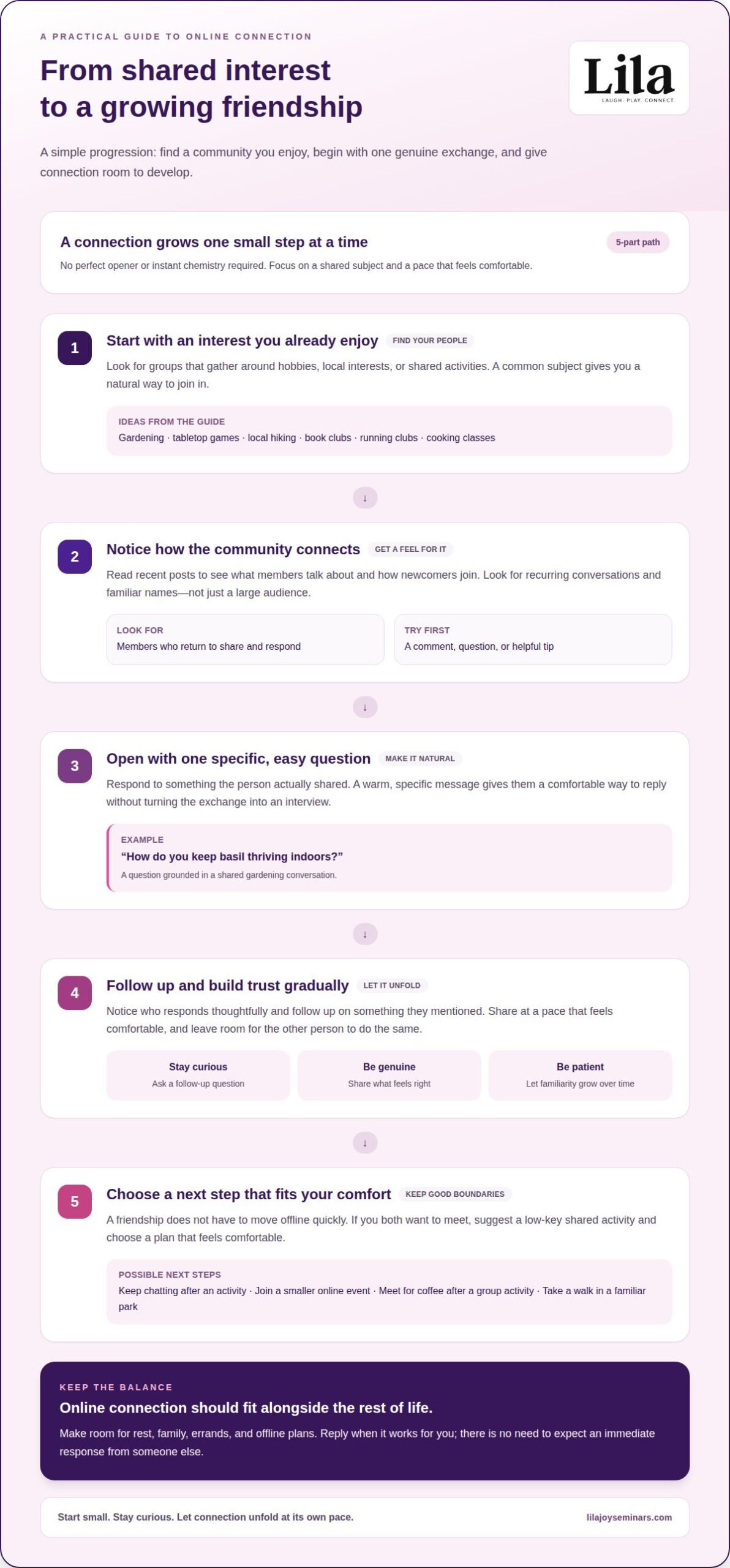
If reaching out feels daunting, choose a small first step: react to a post, answer a question, or share a helpful tip. In a gardening group, you might ask how someone keeps basil thriving indoors. A specific comment gives the other person an easy way to respond without making the exchange feel like an interview. If you’re lonely, returning to familiar conversations can make joining in feel more comfortable.
Potential friends can show up in unexpected places, including gaming servers, parenting forums, and language-learning groups. Notice who responds thoughtfully and shares your interests, then follow up on something they mentioned. You could also ask an existing friend to introduce you to someone who enjoys the same activity. These ways to make friends online as an adult work best when you stay curious and let a connection develop at its own pace.
Online friendship events, such as speed-friending meetups, give you a clear reason to reach out. If a group discussion feels overwhelming, choose a smaller event or message one person afterward about a topic you both enjoyed. Share only what feels comfortable, and give the other person room to do the same. A warm, specific hello is enough to begin; you don’t need a perfect opening line.
3. Balancing online and offline social life
Let online and offline connections support each other rather than compete for all your free time. You might message a friend after work and keep an evening open for family, rest, or a local activity. Check whether online conversations leave you feeling connected or get in the way of sleep, errands, and plans. Adjust your screen time around the life you want, not pressure to reply instantly.
Online conversations can be a gentle place to practice social skills. Try asking a follow-up question, sharing a small detail, or responding thoughtfully in a group chat. If someone mentions running, for example, ask what they enjoy about their route. Small exchanges can make future conversations feel more familiar. Still, a friendship doesn’t have to move offline quickly. Let comfort and mutual interest guide what happens next.
If someone invites you to meet, consider accepting when the plan feels comfortable and fits your day. Suggest something low-key, such as coffee after a running group or a walk in a familiar park. You can also make the invitation yourself: “Would you like to grab coffee after the school fundraiser?” A shared activity can make conversation easier. Friendship apps and dating apps serve different purposes, so be clear and kind about the connection you’re hoping to build.
If your friend lives in another time zone, agree on a flexible way to stay in touch, such as messages they can answer when free or a call that works for both of you. Share when you’re usually available and suggest a time window instead of expecting an immediate reply. If a call doesn’t work, a voice note or thoughtful message can keep the connection warm without crowding either person’s offline commitments.
4. Sending friend requests and introductory messages
Make a friend request personal by mentioning where you crossed paths. Try, “Hi, I enjoyed your comment about mystery novels in the book clubs group.” A detail helps the person remember you and gives the conversation a natural starting point. Keep your profile welcoming and honest, with enough shared interests to make it easy to reply. You don’t need to write your life story or craft a polished introduction.
After they accept, ask an open question about something they mentioned. If they post about baking sourdough, ask how they first got interested. Share a little about yourself, too, so the exchange feels mutual rather than like an interview. A genuine compliment or a small personal update can help build trust. Let the relationship grow through thoughtful replies, not a rush to become close.
To turn an online conversation into a lasting friendship, refer to a detail they shared, keep in touch, and suggest an easy next step when it feels comfortable. After discussing a favorite author, for example, invite them to a virtual book-club chat or a coffee meetup. If they’re not ready, keep things friendly and give them room. A kind follow-up matters more than sending several messages in a row.
Take care before sharing personal details or arranging an in-person meeting. Don’t send money or private information to someone you’ve only met online. If a person refuses to share their identity or speak by phone or video, take that seriously. For a first meetup, choose a public place, tell someone you trust where you’ll be, and arrange a check-in. These steps leave room for curiosity while helping you protect your comfort and boundaries.
Lila
Lila offers adults a playful way to connect through live online improv classes. If you’d like a shared activity with conversation, games, and spontaneity, the classes offer a welcoming space to meet people and join in. There’s no need to perform. Just bring your curiosity.
New students can try one free online class, with no credit card required. It’s a low-pressure way to see whether this kind of group activity feels right for you.
If you’d like to explore, try a free class with Lila.
Let one small connection grow
A new friendship doesn’t need to start with a perfect message or a big plan. It might begin with a shared laugh, a familiar name in a group, or the choice to show up again. Give yourself room to notice which conversations feel easy and which connections you’d like to nurture. Moving at your own pace can help keep the experience genuine.
The ways to make friends online as an adult can open doors, but you choose which ones to walk through. If you’d like a playful space to meet people through shared activities, take a gentle next step with Lila.
Try a free class with Lila and see how it feels. A small beginning is still a beginning, and it can be enough for today.
Frequently Asked Questions
Any tips for success with finding new friends online?
Look for mutual effort, not constant messaging. If someone replies thoughtfully and asks about you, keep the exchange going; if their replies are one-sided, give the conversation space. You might return to a shared topic later, such as asking how a game night or book discussion went. Friendship can grow through small signs of attention, without daily contact or an immediate label.
Is it safe to meet people online?
A few precautions can make meeting safer. Before arranging an in-person meetup, consider whether the person is willing to share their identity and speak by phone or video. Choose a public place, tell someone you trust where you’ll be, and arrange a check-in. You can also keep early conversations online until you feel comfortable taking another step.
How can adults find online friends through hobbies, gaming, or interest-based communities?
Choose a space where people do something together, not just one where they share a label. In a gaming community, joining a cooperative match can create natural moments to talk; in a language group, try practicing with a shared prompt. Notice which members welcome newcomers, and participate in a way that suits you, whether that means chatting, playing, or quietly following along at first.
How can adults find local friends using online groups and event platforms?
Search using both a place and an activity, such as your neighborhood and board games, hiking, or cooking. Before attending, look for details about the gathering’s format and how participants connect. Recurring activities can make it easier to recognize familiar people. If you enjoy talking with someone, suggest a simple follow-up related to the event, such as trying another game night together.
How can you tell whether an online friendship community is safe and welcoming?
Read the group’s guidelines and observe how members respond to newcomers before sharing much about yourself. Clear expectations, active moderation, and respectful replies can give you a sense of the community’s tone. Notice whether people can disagree without personal attacks and whether moderators address disruptive behavior. If the space pressures you to reveal private details or makes you uneasy, you can leave without explaining.
What are common scams and safety risks when making friends online?
Be cautious if someone you’ve only met online asks for money or private information. Another warning sign is refusing to share their identity or speak by phone or video, especially while urging you to meet. Keep sensitive details to yourself while trust is still developing. If a conversation starts to feel pressured, pause before replying or making plans.