


When a conversation starts to fade, gently shift to a topic the other person can choose how much to share about. Knowing what to talk about with new people can be as simple as asking how they got interested in something, then following the part of their answer that catches your attention. A small, open question gives the chat a natural next step.
If you’ve ever worried about sounding awkward or running out of things to say, you’re not alone. You don’t need a perfect line or a list of clever questions. This guide offers easy ways to revive a flagging conversation, ask open-ended questions, explore someone’s interests, and get to know them more deeply, while letting the conversation unfold at its own pace.
Key Takeaways
- Follow up on an interesting answer with a thoughtful question to show you’re listening and give the conversation room to grow.
- If the chat starts to stall, gently shift to a comfortable topic and let the other person decide how much to share.
- Use open-ended prompts about someone’s experiences, interests, or plans instead of questions that invite only a yes-or-no answer.
- Ask how an interest began, then share a little of your own experience to make the exchange feel more natural and mutual.
1. Best Questions to Get to Know Someone Deeply
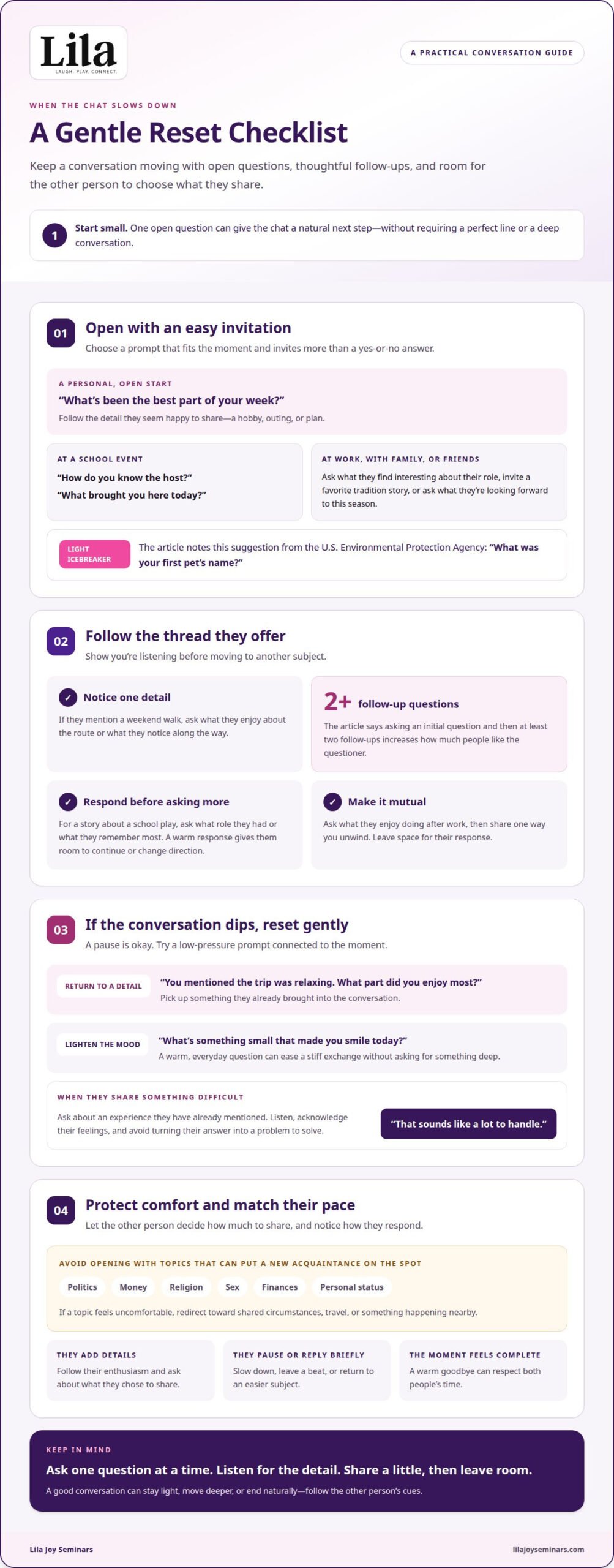
Choosing what to talk about with new people gets easier when you begin with one open question. Try asking, “What’s been the best part of your week?” Their answer might lead to a hobby, a recent outing, or a plan they’re excited about. Follow the detail they seem happy to share. That keeps the exchange personal without asking them to reveal more than they want.
Shared circumstances offer friendly starting points. At a school event, ask, “How do you know the host?” or “What brought you here today?” A suggested icebreaker from the U.S. Environmental Protection Agency is, “What was your first pet’s name?” It’s light, easy to answer, and can lead to a story about a beloved animal or childhood memory.
Interests can lead naturally to a deeper conversation. If someone mentions a weekend walk, ask what they enjoy about the route or what they notice along the way. You could also ask for a local recommendation, then share one of your own. This back-and-forth makes curiosity feel mutual, rather than turning the conversation into a checklist.
Follow-up questions show that you’re listening. Asking a question and then at least two follow-up questions increases how much people like the questioner. If someone mentions a school play, ask what role they had and what they remember most. Respond to their answer before asking more. “That sounds like a memorable night” gives them room to add something or change direction.
If you’re wondering what to talk about with new people, balance a question with a small detail about yourself. Ask what they enjoy doing after work, then mention one way you unwind. Leave space for their response. You don’t need to impress anyone or create a lasting relationship in one chat. A thoughtful question and an honest detail can help two strangers feel more at ease and give the conversation a comfortable next step.
2. What if a conversation takes a downturn?
When a chat gets quiet, don’t rush to fill every pause. Try a gentle reset tied to the moment: “You mentioned the trip was relaxing. What part did you enjoy most?” If the other person seems distracted, lighten the mood instead. You might say, “What’s something small that made you smile today?” A warm response can ease a stiff exchange without asking them to share something deeper.
Questions about feelings and personal experiences can bring people closer, but timing matters. Ask about an experience they’ve already mentioned, such as, “How did you feel when you started that new job?” Then listen without turning their answer into a problem to solve. If they share something difficult, acknowledge it with care: “That sounds like a lot to handle.” Curiosity feels meaningful when it respects their comfort.
Some subjects can make a new acquaintance feel put on the spot. Avoid starting with politics, money, religion, sex, finances, or personal status. If the conversation drifts there and feels uncomfortable, redirect toward shared circumstances, travel, or something happening nearby. For example: “That’s a big topic. Have you found any favorite places to visit around here?” The shift offers a fresh thread without criticizing anyone’s views.
Personal growth can be easier to discuss through small, everyday changes. Ask, “What’s something you’ve been trying to learn?” or “Has anything surprised you lately?” These prompts let someone choose between a light answer and a more personal one. You can share a learning moment of your own, such as getting lost on a trip and discovering a quiet café. If they respond briefly, take the cue and return to an easier subject. A good conversation doesn’t need to become profound; a comfortable connection can begin with one honest exchange.
3. Using open-ended questions to encourage conversation
Questions that invite a story usually keep a conversation moving better than yes-or-no prompts. Try, “How’s it going for you these days?” The Centers for Disease Control and Prevention offers this as an open-ended conversation starter. Then listen for a detail you can follow, such as a new routine, project, or plan. Ask one question at a time so the other person has room to answer in their own way.
Choose conversation starters that fit the setting. At a work gathering, ask what someone finds interesting about their role; at a family dinner, invite a story about a favorite tradition. With friends, you might ask, “What are you looking forward to this season?” These prompts help you get to know someone through the stories they choose to share, without making the exchange feel like an interview.
Aspirations can open a thoughtful thread, too. Ask, “What’s something you’d like to learn or try?” If they mention cooking, music, or travel, follow their enthusiasm rather than changing the subject. They may be interested in continuing if they ask you questions, add details, or introduce a related topic. If their replies stay brief, slow your pace and give the conversation space.
People have different rhythms. A quieter person may need a pause to gather their thoughts, while someone more energetic may enjoy quick back-and-forth. Match their pace gently: leave a beat after a question, notice whether they expand on their answer, and respond to what they actually said. If the conversation dips, return to something nearby, such as the event, a shared activity, or a light question about what’s been keeping them busy.
You can also end kindly when the moment feels complete. Say, “I’ve enjoyed talking with you; I’m going to say hello to a few others.” A warm goodbye respects both people’s time and leaves the connection open without forcing the chat to continue.
4. Asking how someone developed an interest
“How did you first get interested in that?” invites more than a list of hobbies. It gives someone a chance to share an origin story, whether they started painting after a school project or learned to bake beside a grandparent. Their answer may reveal what they value, who encouraged them, or what keeps them curious. That’s a more personal way to connect than simply asking whether they enjoy the activity.
Follow the story they offer instead of guessing what it means. If they mention learning guitar from a friend, ask what song they first tried to play. If they took up gardening during a move, ask what they enjoy growing now. Each question builds on a detail they chose to share. This makes the exchange feel like shared thought, not a mental checklist.
Give the person room to keep the topic light or make it deeper. A hobby may connect to family, identity, or a difficult chapter, but they decide how much to reveal. You can respond with a simple reflection, such as, “It sounds like that time with your grandmother stayed with you.” Then pause. Comfort often comes from being heard without pressure to explain more.
Make the conversation mutual by offering a small story of your own. If they describe learning to cook, you might share how one dinner recipe became your favorite. Keep your contribution brief, then leave space for their response. That back-and-forth can strengthen connection while keeping attention on both people. The aim isn’t to uncover someone’s whole life. It’s to notice what lights them up and invite one more story. If you’d like a playful way to practice responding in the moment, explore live online improv as a space to try new conversational approaches.
Let Curiosity Lead Your Next Conversation
You don’t have to leave every first chat with a new friend. A small moment of genuine interest can be enough to make the next encounter feel easier. The next time you’re wondering what to talk about with new people, notice what catches your attention: a story, a hobby, or something they’re looking forward to. Let that detail guide you instead of searching for the perfect thing to say.
And if you’d like more room to practice responding in the moment, Lila offers an interactive way to explore spontaneity and connection through improv. You can take the next step at your own pace, without needing to arrive with polished lines or a plan.
Try a free class to see what it is like. Every conversation can begin simply, with a little curiosity and space for the other person to meet you there.
Frequently Asked Questions
What if a conversation takes a downturn?
Try a small change of direction, or let the exchange pause naturally. At a gathering, you could mention the music, ask whether they’ve tried the refreshments, or invite their opinion about the room’s setup. If they seem ready to move on, say, “It was nice meeting you,” and give them space. A quiet moment doesn’t mean you’ve failed; conversations can simply reach a natural stopping point.
What types of questions are best to get to know someone deeply?
Choose questions that invite reflection without demanding private details. You might ask, “What kind of day helps you feel most like yourself?” or “What’s something you’ve changed your mind about?” These prompts give the other person control over how personal their answer becomes. Listen for the parts they seem glad to discuss, and share your own perspective when it helps the exchange feel balanced.
When Is It Time To Ask Deeper Questions?
Wait until the conversation feels comfortable and the other person has chosen to share more than surface details. If they bring up a meaningful experience, you could ask, “Would you like to tell me more about that?” Their response helps set the depth and pace. If they change the subject or answer briefly, follow their lead and keep things lighter.
What are good conversation starters for meeting someone new?
Use a simple opener connected to where you are or what you’re doing. At a workshop, try, “What made you choose this session?” At a neighborhood event, ask, “Have you been to this gathering before?” These questions give the other person an easy starting point. A friendly introduction and a genuine response to their answer can make the next exchange feel less rehearsed.
What topics are safe and easy to talk about with strangers?
Shared surroundings, enjoyable activities, food, and low-key plans are usually comfortable starting points. At a community event, for instance, ask what they’ve enjoyed so far. At a café, you might ask whether they have a favorite drink there. Keep the topic open and everyday rather than asking about sensitive personal matters. If they show interest, let their answer guide what comes next.
How do you start a conversation without feeling awkward?
Give yourself one small task: greet the person and make a simple observation. You could say, “Hi, I’m Sam. This is my first time at this book club.” That offers context without requiring a clever line. Take a breath, speak at a comfortable pace, and allow the other person to respond. The goal isn’t to remove every awkward feeling, just to begin kindly.