


You don’t have to make a dramatic leap to try something new. Hobbies to get out of my comfort zone can begin with a small, curious step, like picking up a paintbrush, joining a friendly group activity, or moving your body in a new way. It’s okay if the first try feels a little awkward. You’re there to explore, not impress anyone.
Maybe you want a change of pace, a chance to meet people, or simply something that feels like yours. A hobby can make room for creativity, movement, and connection while gently stretching familiar routines. In this guide, you’ll find creative, social, and active ideas, along with simple ways to choose a manageable starting point. No big transformation required, just one small thing that sounds interesting enough to try.
Key Takeaways
- Choose a creative activity that lets you experiment without needing polished results, such as painting, writing, or pottery.
- Try a manageable new experience, then give yourself room to adjust if it feels unfamiliar at first.
- Look for hobbies that bring people together through shared activities like volunteering, dancing, or cooking.
- Explore how creative, active, and social hobbies can add variety, movement, and connection to your routine.
1. Creative hobbies such as painting, writing, and pottery
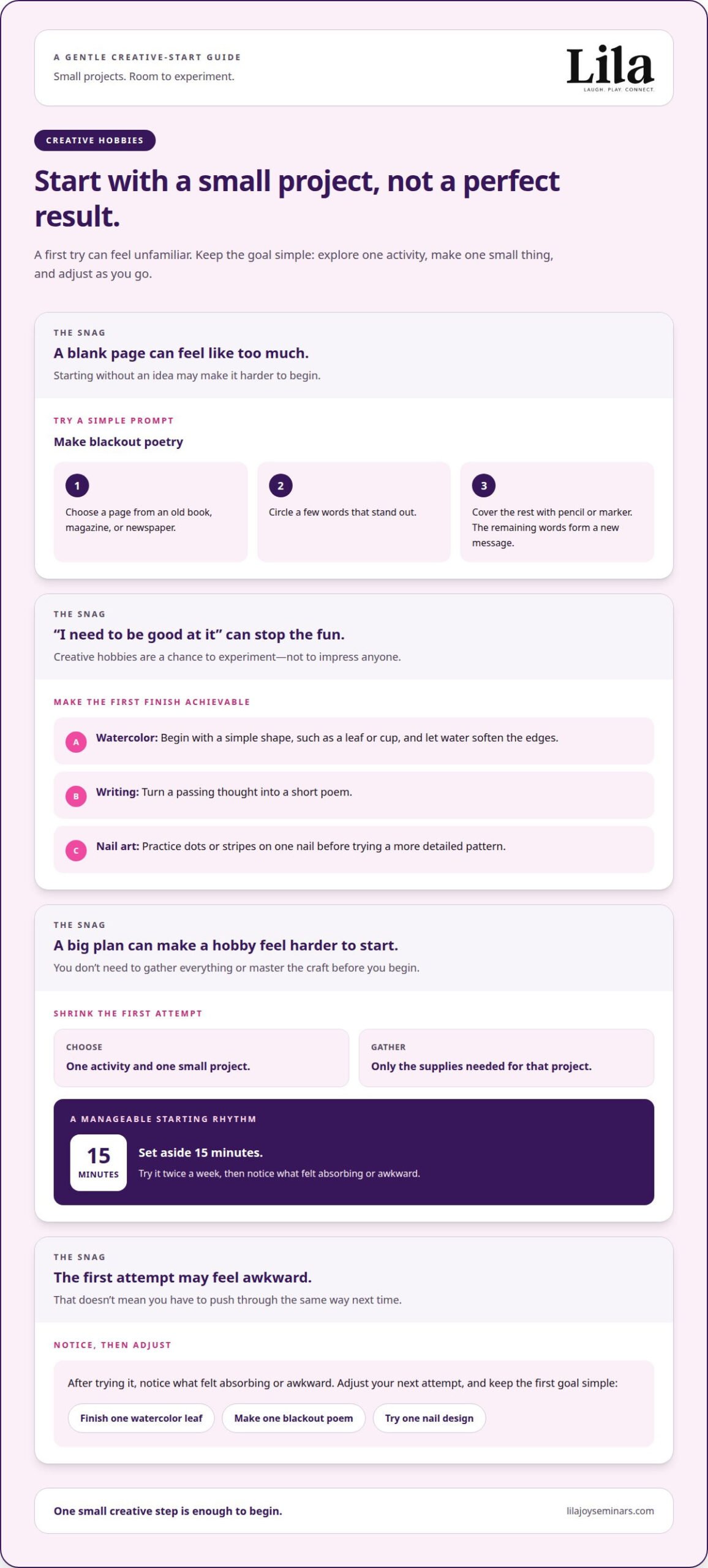
A blank page can feel more inviting with a small prompt. Try blackout poetry: choose a page from an old book, magazine, or newspaper, circle a few words, and cover the rest with pencil or marker. The remaining words form a new message. Watercolor offers another gentle experiment. Start with a simple shape, such as a leaf or cup, and let water soften the edges. Beginner guides can explain brushes, color mixing, and practice pages for watercolor.
Writing, painting, and pottery each offer a different kind of creative focus. A short poem can turn a passing thought into something tangible. Painting lets you explore color without needing a perfect picture. Pottery invites you to notice texture and form as you shape clay. A small creative project can be a gentle first step beyond familiar routines, giving your attention a welcome place to rest and making room for playful expression. These activities aren’t a substitute for mental health care, but the process can feel absorbing and personally meaningful.
Prefer tiny details? Nail art combines color, pattern, and careful brushwork. Practice a simple design on one nail, such as dots or stripes, before trying a more detailed pattern. Crafts also go beyond painting and writing: needlework, jewellery making, metalwork, and handmade cards all let you work with your hands. A card for a friend, for example, can bring together drawing, paper, and a few handwritten words. A new craft offers a fresh way to explore your creative side.
To start and stick with a new hobby, choose one activity, gather only the supplies needed for a small project, and set aside 15 minutes. Try it twice a week, then notice what felt absorbing or awkward and adjust your next attempt. Keep the first goal simple: finish one watercolor leaf, blackout poem, or nail design. This step-by-step approach gives you a clear next move without asking you to master the craft right away.
2. Exploring activities outside your comfort zone
Trying something unfamiliar can take little equipment and just a short outing. Geocaching, for example, uses a smartphone and pen to find hidden containers outdoors. Explore a nearby park, follow a map, and stop whenever you like. It’s a simple way to add curiosity to a walk without planning a full-day adventure.
For movement, choose an activity that feels manageable today. A beginner dance class lets you learn steps gradually, while a martial arts class introduces basic movements in a guided setting. Even 20 minutes of moderate physical activity a day can make a difference. If you’re drawn to swimming but feel uneasy around water, learn with an instructor familiar with helping people approach that fear.
Adventurous hobbies can be beginner-friendly when you start in a safe, controlled setting. Try a marked walking trail with a friend, a beginner climbing class with instruction, or a guided outdoor activity. Choose a setting, pace, and level of support that make the first attempt manageable. You don’t have to start with the boldest version of an activity.
Volunteering offers a different kind of stretch. Help prepare food at a community meal, sort donations, or join a neighborhood cleanup. A clear task gives you something to focus on as you meet people through shared work. Volunteering can also broaden your CV or offer a first step toward a new job.
Beginner class costs for dance, improv, rock climbing, and martial arts depend on the activity, location, class format, and equipment. For improv, you can start with a free online improv class, with no credit card needed.
To find local clubs and hobby groups in the United States, search for an activity alongside your city or town. Check community centers, public libraries, parks departments, and local volunteer organizations for classes and group events. Read the activity description, then choose an introductory option with a setting and pace that suit you.
3. Social hobbies such as volunteering, dancing, and cooking
A shared activity gives conversation an easy place to start. At a community garden, you might water seedlings beside someone who also enjoys growing tomatoes. At a book club, the latest chapter offers a natural topic to discuss. These small exchanges can make meeting people feel less like an introduction and more like doing something together.
Dancing can be a gentle social challenge, even if you’d rather not dance in front of others. Put on a song at home and try a few steps, or join a beginner class where everyone is learning together. Focus on the rhythm, ask a partner to practice a simple movement, or watch first and join when you’re ready. The goal can be enjoying the music, not getting every step right.
Cooking brings people together around a practical, shared goal. Invite a friend to make vegetable soup, exchange family recipes, or join a community cooking group. Choose a dish with a few clear steps, then split tasks such as washing vegetables, stirring, and setting the table. Sharing the finished meal gives everyone something to enjoy, even if the soup needs more seasoning.
For a more expressive challenge, try a community choir, beginner music group, or local theater production. You might sing in an ensemble, read a short passage aloud, or help with costumes backstage. Acting in a play can create opportunities to make new friends, while playing music for friends gives you a friendly way to practice. Choose a role that stretches you without demanding the spotlight right away.
To make a social hobby easier to continue, pick an activity with a clear shared task and a pace that suits you. For example, help prepare ingredients at a cooking meetup before taking on a whole recipe. If dancing feels like a bigger leap, begin with a song at home, then try a class. Small, repeatable steps let connection grow naturally alongside the activity.
4. Benefits of hobbies for mental health, fitness, and connection
A hobby can give your attention somewhere concrete to land. A crossword puzzle, for example, asks you to focus on clues and test possible answers. A familiar activity can feel restful, while a new one offers a small challenge. Notice how you feel before and after: calmer, energized, or simply glad you made time for something beyond routine. That observation can help you choose activities that suit your needs.
Movement adds another kind of benefit. A brisk walk, beginner dance practice, or martial arts class can make exercise feel less like a task and more like something you chose to do. Even 20 minutes of moderate physical activity a day can make a difference. Start with a pace you can manage, then pay attention to your breathing and energy. The point isn’t to turn a hobby into a test; it’s to find movement you’re willing to return to.
Martial arts can combine movement with learning. Practicing a sequence of basic steps asks you to pay attention, coordinate your body, and try again when a movement feels unfamiliar. Learning martial arts may offer opportunities to practice physical strength, agility, and confidence. A beginner class offers clear structure, while solo practice at home lets you repeat a movement at your own pace.
Shared hobbies create connection through ordinary moments. Playing music for friends gives you a reason to practice and a low-pressure way to share something you enjoy. A walking group can turn a quiet exercise habit into time spent alongside others. Even learning a new skill with one friend gives you a common topic to revisit. Small conversations about what felt easy, surprising, or challenging can deepen that connection.
Match an activity to the kind of well-being you want to nurture: focus, movement, or company. Then choose one small next step, such as solving a puzzle, taking a walk, or sharing a song. Hobbies can support everyday well-being, but they aren’t a substitute for professional mental health care when you need it.
Lila
Lila offers adults a playful way to explore connection and spontaneity through live online improv classes. Held on Zoom, they offer a shared activity where listening, responding, and making room for unexpected ideas are part of the experience. No prior improv experience is needed. Classes may suit you if you’re curious about a social hobby and would rather learn by taking part than focus on polished results. For more personal support, online one-to-one life coaching is also available. These are not therapy or a promise of specific outcomes, but different ways to explore a useful next step. If you’d like to try improv, start with a free first class, with no credit card required.
Let curiosity choose your next step
You don’t need to remake your routine all at once. Choose one small experiment that feels interesting, then notice what you’d like to explore next. Maybe you want more playful conversation, a shared activity, or a new way to express yourself. Let curiosity, not pressure to improve, guide your choice.
If you’re thinking, “I want hobbies to get out of my comfort zone,” start with an experience that feels possible today. You can take part quietly at first, learn as you go, and decide for yourself whether you’d like to return. A little awkwardness doesn’t mean you chose badly; it may simply be part of trying something unfamiliar.
For a playful way to practice spontaneity and connect with others, try a free first class with Lila’s online improv classes, with no credit card required. Take your next step at your own pace. A little curiosity is enough to begin.
Frequently Asked Questions
What hobbies help people get out of their comfort zone?
Hobbies that gently change how you spend your time can help you explore beyond familiar routines. Try a photography walk with a theme, such as noticing reflections, or join a language-exchange meetup and practice listening before speaking. A local history group can also give you a shared subject to discuss. Choose an activity that interests you, rather than one that demands a dramatic leap.
What are beginner-friendly hobbies for overcoming social anxiety or shyness?
Structured activities can make socializing feel more approachable because there’s something specific to focus on. Consider a board game meetup, where turns and rules guide interaction, or join a volunteer task with clear roles. You might attend with someone you trust or observe before joining in. Hobbies can offer ways to connect, but they aren’t treatment for social anxiety.
What creative hobbies encourage trying new things?
Photography, collage, and songwriting invite experimentation without requiring a perfect result. For a photo challenge, choose one subject, such as doorways, and capture it from different angles. To make a collage, combine scraps of paper, packaging, and images in a new arrangement. If you write songs, change a familiar lyric or rhythm and see where the small variation leads.
What are low-cost hobbies that push you outside your comfort zone?
Start with activities that use things you already have. Fold scrap paper into origami, sketch a household object, or take a neighborhood walk with a theme, such as finding unusual shapes. If you want company, look for a community activity with a shared task. The stretch can come from trying something unfamiliar, rather than buying equipment or aiming for polished results.
How do you choose a hobby that feels challenging but manageable?
Choose one activity that interests you and identify what feels new, such as joining a group or sharing your work. Make that first step smaller: attend as an observer, try a beginner activity, or invite a friend along. Afterward, notice what you enjoyed and what felt uncomfortable. Adjust your next step so it remains a choice, not a test.