


The right hobby doesn’t have to become your next big thing. Choosing online hobbies for adults in their 30s can start with a gentler question: what would feel good to make time for, right now? You might want a quiet creative outlet, a chance to learn something new, or a little more connection with other people. You don’t need a perfect plan or a lifelong passion. Just a starting point that fits your life.
It’s easy to overthink the choice, especially when time, budget, and energy already feel spoken for. A helpful first step is to notice what interests you, what kind of experience you’re hoping for, and how much room you can realistically give it. Then try an option without treating it as a commitment. This guide explores creative online hobbies, simple ways to choose one, and how an activity can reflect your values and support your wellbeing. You can move at your own pace, follow what feels inviting, and change direction if it doesn’t.
Key Takeaways
- Choose a hobby by matching what you hope to get from it with the time, budget, and energy you can comfortably give.
- Explore creative outlets such as writing, drawing, or learning an instrument, and let curiosity matter more than skill.
- Notice how different activities leave you feeling, then make room for the ones that bring a welcome sense of focus, ease, or connection.
- Look for hobbies that reflect what you care about, whether that means making things, learning, connecting, or contributing to your community.
1. How to choose a Hobby?
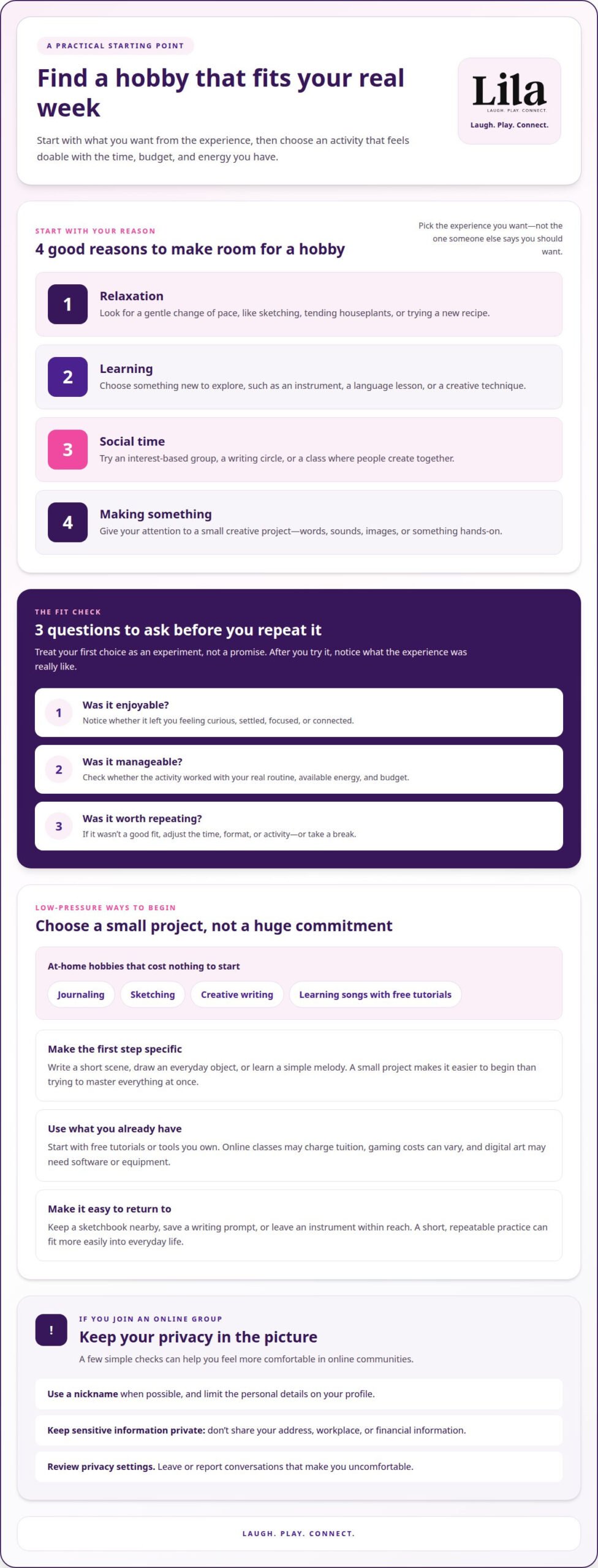
Start with one goal: relaxation, learning, social time, or making something. Then match it to an interest you already enjoy, such as music, stories, or drawing. For online hobbies for adults in their 30s, the best fit is one that works with your real week, not an ideal one. If you have limited free time, a short creative activity may feel easier to return to than a long commitment.
For online classes and communities, choose platforms that offer activities you’re genuinely interested in and make it clear how to join, learn, or connect with others. Look for beginner-friendly classes and active moderation if you’d like a guided group. Before signing up, review the account requirements and check how to control your profile’s visibility.
At-home hobbies that cost nothing to start include journaling, sketching, creative writing, and learning songs through free online tutorials. Choose one small project, such as writing a short scene or drawing an everyday object. If you enjoy sports, try a beginner-friendly movement class online using the space and equipment you already have.
Costs depend on the activity and what you already own. Online classes may charge tuition, gaming expenses can vary with the game and optional purchases, and digital art may require software or equipment. Start with free tutorials or tools you have, then consider whether paid features add enough value for your interests.
To fit a hobby around work and family, choose a regular time that works with your existing routine. You might set aside a few minutes each day or connect the activity to a quiet moment after dinner. A short, repeatable practice is easier to maintain than an ambitious plan that competes with family time.
Online communities can carry privacy and safety risks, including unwanted contact and oversharing. Use a nickname when possible, limit profile details, and don’t share your address, workplace, or financial information. Review privacy settings, and leave or report conversations that make you uncomfortable.
Treat your first choice as an experiment, not a promise. Try the activity for a week, then consider whether it was enjoyable, manageable, and worth repeating. If it wasn’t a good fit, adjust the time, format, or activity. Changing interests or taking a break is part of finding a sustainable habit.
2. Creative hobbies
Creative hobbies give your attention somewhere to land, whether you’re making words, sounds, or images. Try creative writing, drawing, digital art, photography, or learning an instrument. Free online tutorials can help you start guitar, ukulele, or keyboard practice at home. Choose one small project, such as writing a scene or learning a simple melody, rather than trying to master everything at once.
For creative writing, begin with a prompt: describe a childhood room, invent a character, or rewrite the ending of a familiar story. Set a short timer and write without editing, then return later to shape one paragraph. Keep your work private in a notebook or share a poem with a writing group. A specific prompt can make a blank page feel less daunting.
Some creative hobbies are naturally solo: sketching, journaling, and instrument practice let you work at your own pace. Others become social through online writing circles, group art classes, collaborative music projects, or photography communities. You can combine both approaches by making something on your own, then sharing it with a group for conversation and fresh ideas.
Popular online hobbies for adults in their 30s include creative writing, digital illustration, learning music, and photography. These options can fit different moods: watching a drawing tutorial may feel restful, while sharing a draft with a writing group adds interaction. Pick based on the kind of creative time you want, not a trend or someone else’s finished work.
If meeting people is important to you, look for a recurring online class or an interest-based group where members create together. A writing circle might exchange short pieces, while a music group could practice songs collaboratively. A shared activity offers an easy conversation starter. Listen first if you like, then contribute when you’re ready and let conversation grow around the work.
To make creativity sustainable, make the first step easy to repeat. Leave a sketchbook beside your chair, save a writing prompt on your phone, or keep an instrument within reach. A tutorial can spark an idea, but try making something yourself soon afterward. The finished piece doesn’t need to impress anyone: making it is the practice.
3. Benefits of hobbies for wellbeing
A hobby can give a busy day a clear change of pace. After work, tending houseplants, sketching a window view, or cooking a new recipe can create a small pocket of attention for something you chose. Its value isn’t measured by a finished project. Notice whether the activity leaves you feeling more settled, curious, or connected, and use that to guide your next choice.
Some activities invite steady focus. Following a watercolor tutorial, practicing an instrument, or assembling a jigsaw puzzle gives your mind a simple task to stay with. Learning something new can also involve memory: recalling a melody, remembering a recipe step, or returning to a language lesson all ask you to bring information to mind. Keep the activity enjoyable rather than turning it into another performance goal.
Hobbies can also create gentle social contact. A virtual book club might discuss a chapter, while an online cooking group compares favorite ways to prepare soup. Shared interests give conversation a starting point, even if you prefer to listen before speaking. Choose a format that feels comfortable, such as a small group, a chat-based community, or a class where everyone works on the same activity.
Creative or hands-on hobbies can offer a sense of progress without requiring a grand result. A few lines in a journal, a repaired button, or a new guitar chord marks something you tried. If a task feels frustrating, make it smaller: practice one chord, write one paragraph, or follow one recipe step. That adjustment can make it easier to return.
Check in with yourself after each activity. Note what you did, how it felt, and whether you’d like to repeat it. For example, consider whether a solo drawing break felt restorative or a group game left you feeling more engaged. These observations can help you choose hobbies that fit your needs, while leaving room for your preferences to change. A hobby should support your life, not become another standard to meet.
4. Choosing hobbies that align with personal values
Your values can help narrow a long list of possible activities. If creativity matters to you, try writing short stories or making digital art. If learning feels meaningful, explore a language or study a subject you’ve always wondered about. If connection matters most, choose a book group or collaborative creative activity. The aim is to make your free time feel more like you.
Start by naming one value you’d like your hobby to express. Someone who cares about the environment, for example, might enjoy gardening, mending clothes, or joining a beach cleanup. Someone drawn to generosity could knit or illustrate thoughtful gifts. Choose an activity whose ordinary steps reflect the value, not just its end result.
Exploring a hobby that reflects your values doesn’t require a big commitment. Try one manageable activity, such as repairing a loose button, sketching a plant, or reading about native flowers. Notice what feels satisfying: learning a skill, making something useful, or spending time outdoors. That detail can point you toward a hobby you’ll want to return to.
Consider how an activity affects your time, resources, and relationships. If sustainability matters to you, reuse materials for collage or choose a digital project using supplies you already own. If family connection is important, invite a relative to share a recipe or work on a puzzle together. A hobby can reflect several values at once.
Your values and circumstances can change. A social activity may feel right at one time, while quiet reading or solo music practice suits another. Review your choices occasionally: does the hobby still fit what matters to you, and does its routine feel comfortable? Adjusting an activity is part of making it your own.
Choose a small next step that turns interest into action. Save a recipe, gather fabric scraps for a repair, or find a community beach-cleanup listing. Then try the activity and notice how it feels. You’re exploring, not proving anything. A hobby that aligns with your values can make your free time feel personally meaningful.
Lila
Lila offers adults a welcoming way to explore improv as a creative, social online hobby. Live classes on Zoom provide a shared space to play with ideas, listen, and respond together, with no prior improv experience required. New students can try a free first class, with no credit card required.
The ongoing membership includes unlimited live online classes for $100/month. Classes last 1–2 hours, and members choose from the class calendar, so you can find an option that fits your interests and availability. For a more personal conversation about your goals, one-to-one online life coaching is also available with a free intro session.
If playful connection sounds like a good next step, try a free first class with Lila.
Let curiosity choose the next step
You don’t need to find the one perfect hobby. Let curiosity lead you toward a small experiment, then notice what you’d like to make room for again. The best online hobbies for adults in their 30s can shift as your interests, values, and everyday life change. That isn’t a false start. It’s part of making your free time feel like your own.
Choose something that feels inviting today, not something you think you should enjoy. You might want to create quietly, explore an idea with others, or make space for a little play. There’s no need to arrive polished or certain. A first try can simply help you decide whether the activity suits you.
If shared, playful creativity sounds like a welcome next step, try a free first class with Lila. Begin gently, stay open to what feels meaningful, and give your curiosity room to grow.
Frequently Asked Questions
How to choose a Hobby?
Choose an activity that suits the experience you want, then make it easy to try. If you’re curious about photography, for example, take pictures with your phone before buying a camera. Afterward, notice which parts you enjoyed: spotting details, editing images, or sharing them. That can help you decide whether to continue, change the format, or explore another interest.
What online hobbies can adults learn for career or personal growth?
Online hobbies can help you practice skills that are useful at work and in daily life. Creative writing can help you shape ideas, learning a language can introduce new ways to communicate, and coding projects give you a chance to make something practical. For personal growth, try activities that invite reflection or collaboration, such as journaling prompts, music practice, or an online improv class.
How can beginners choose an online hobby and get started?
Pick one activity and find a beginner-friendly way to try it without creating a complicated setup. For example, open a free drawing tutorial, use a notes app to draft a short story, or join an introductory online class. Set one clear first task, such as sketching a cup or writing a character description. After trying it, decide what would make your next attempt more enjoyable.
What are the best platforms for online hobby classes and communities?
Choose platforms that offer activities you enjoy, make it clear how to join, learn, or connect with others, and welcome beginners. If you prefer a guided group, look for active moderation. Before joining, review account requirements and profile visibility settings.