


If you’re wondering how to meet people online as an adult, start with a shared interest: respond to someone’s post, ask a thoughtful question, and give the conversation room to grow. On reciprocal social networks, friendship depends on mutual interest, so a warm opening is an invitation, not a test. Online connections can complement, rather than replace, in-person friendships.
If starting a conversation feels awkward, that’s understandable. You don’t need a perfect introduction or a long list of things in common. A small, genuine comment can help you find out whether you enjoy talking with someone.
This guide explores how to meet people online as an adult through interest-based spaces, thoughtful conversation, and a comfortable pace. You’ll learn how to meet people online as an adult while keeping room for offline connections, and how to decide when exchanging contact details feels right. There’s no need to rush or make every conversation a lasting friendship. Start with curiosity, notice what feels easy, and take the next small step when you’re ready.
Key Takeaways
- Look beyond dedicated friendship platforms: interest-based communities and smaller online spaces can make it easier to find people with something in common.
- Build a conversation gradually by responding to what someone shares, asking an open question, and noticing whether the interest feels mutual.
- Keep online friendships and offline connections side by side, letting conversations deepen without rushing to meet or exchange contact details.
- Use a simple introduction that feels like you, then share contact details when the conversation feels comfortable and reciprocal.
- Expect some conversations to fade; steady, low-pressure effort gives new friendships room to grow.
1. Any tips for success with finding new friends online?
Start with a shared interest, then look beyond spaces labeled “friendship.” A neighborhood gardening forum, a small gaming server, or a fan group for a favorite show can connect people who already enjoy the same topic. Browse a few posts first. When someone shares a recipe, travel photo, or book recommendation, mention a detail and ask a genuine question. A specific opener, such as “What herbs did you use in that recipe?” gives them an easy way to reply.
Choose spaces that fit your interests, location, and stage of life. Search for local book clubs, hiking communities, or recreational sports groups, then look for conversations about nearby meetups. A book club discussion gives you a ready-made subject, while co-ed soccer, volleyball, tennis, kickball, or pickleball groups offer a shared activity. Hiking groups may appeal to adults in their 30s and 40s. If faith matters to you, search for a nearby faith community’s online group or event page.
Interest-based groups are just one option. Regular participation can make familiar names easier to approach. Try commenting in the same community’s weekly thread, joining a recurring online game, or attending an activity-based group event. If you follow a run club such as Midnight Runners, Nike Run Club, or Road Runners Club, look for its online community and local activities. Volunteering groups can also bring people with varied backgrounds together around a shared task.
On reciprocal social networks, both people need to show interest for a friendship to take shape. Send one thoughtful message, respond to their answer, and notice whether they also ask questions or keep the conversation going. Keep the exchange manageable: chat with no more than five people at a time. Dr. Marisa Franco calls taking initiative instead of waiting “aggressive friending.” A kind first message is a small social risk, not a demand for instant closeness.
Are there age limits or rules for popular friendship and social apps? Age requirements and community rules vary by platform, so read the current terms before joining. Choose spaces whose eligibility requirements and conversation guidelines suit you.
Which online platforms are free, and which require subscriptions or fees? Some communities are free to join, while others charge for subscriptions, paid features, or events. Check membership details before signing up, since payment rules vary.
Shy adults can build confidence one small step at a time: leave a kind comment, then ask a follow-up question. Share a little about your own experience, such as what you enjoyed in a recent book, and follow up if the conversation feels mutual. Gradual openness can build trust without making every chat feel like a performance.
2. Balancing online and offline social connections
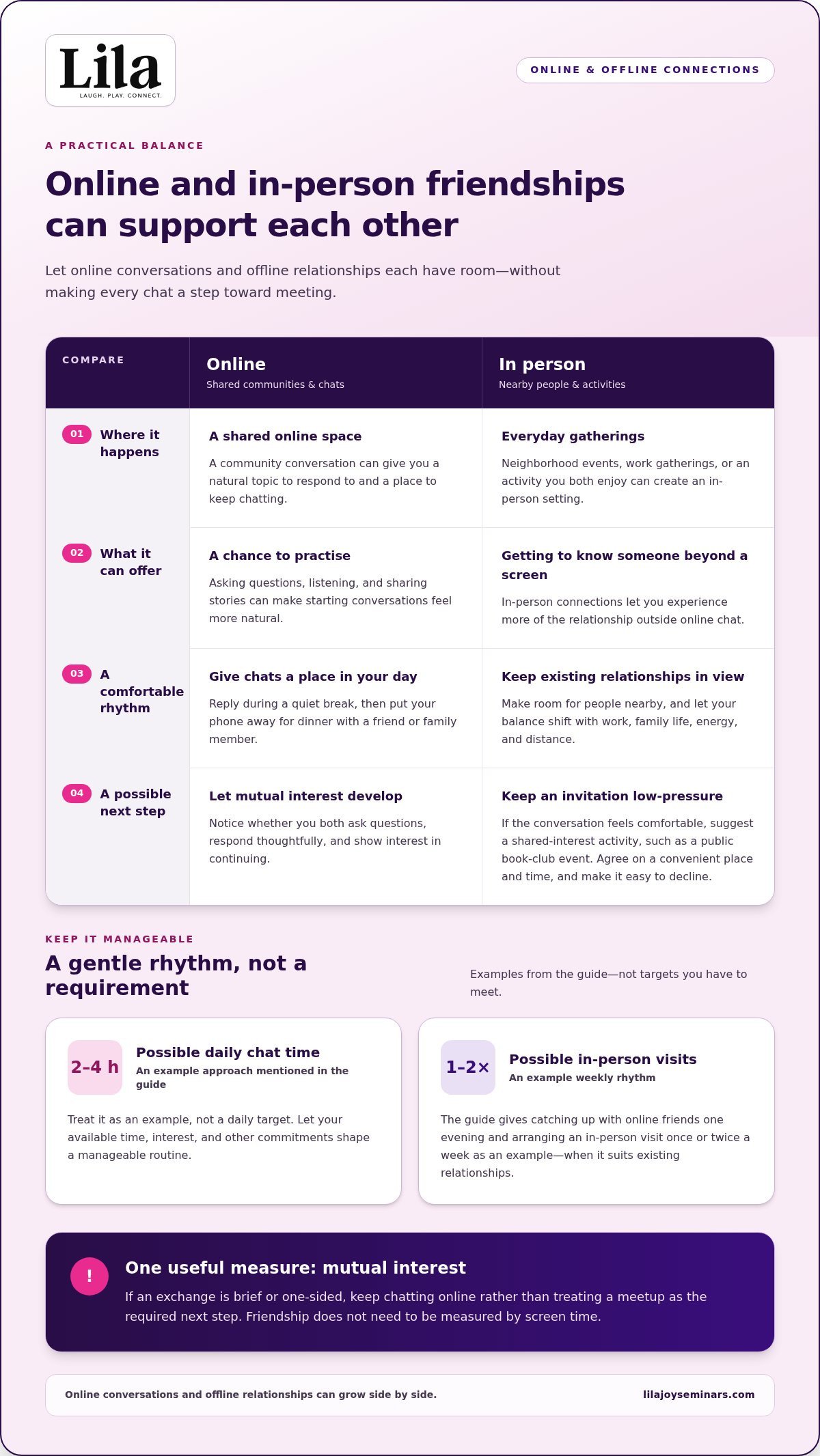
Online and in-person friendships can support each other. A conversation in a shared community can help you practise asking questions, listening, and sharing stories. When you meet someone at a neighborhood event or work gathering, those same skills can make starting a conversation feel more natural. Offline connections also let you get to know people beyond a screen.
If you’re considering how to meet people online as an adult, include offline relationships in the picture too. Give online chats a place in your day without letting them crowd out sleep, work, or time with people nearby. One suggested approach is setting aside 2–4 hours a day for chatting or using a friendship app. Treat that as an example, not a daily target you must meet. Your available time, interest in the conversation, and other commitments should shape a manageable routine.
Keep a simple rhythm. You might reply to a message during a quiet break, then put your phone away for dinner with a friend or family member. If an online group discusses local activities, choose an event that genuinely interests you. That gives the conversation a shared next step without making every online friendship depend on meeting in person.
How can adults turn online friendships into in-person connections? Let a comfortable conversation develop first, then suggest a low-pressure activity related to something you both enjoy, such as a public book-club event. Agree on a convenient place and time together, and make the invitation easy to decline.
Before suggesting a meeting, notice whether the conversation feels mutual. Do you both ask questions, respond thoughtfully, and show interest in continuing? If the exchange is still brief or one-sided, keep chatting online rather than treating a meeting as the required next step. You can also suggest a group activity, which keeps the focus on a shared interest rather than intense one-to-one conversation.
Try a small weekly routine that leaves room for both kinds of connection. For example, spend an evening catching up with online friends and arrange an in-person visit once or twice a week when it suits your existing relationships. Thinking about how to meet people online as an adult can include making space for people in both settings, rather than measuring friendship by screen time. Your balance can shift with work, family life, energy, and distance.
As online conversations grow, share everyday moments as well as personal stories: a favorite weekend walk, a new recipe, or something that made you laugh. Ask about their experiences, remember details, and celebrate good news when they share it. These small exchanges can keep a friendship present between chats and make a shared activity feel like a natural next step, not a sudden leap.
3. Being patient through trial and error
Making friends as an adult takes time and effort, and finding a good fit can involve trial and error. A friendly exchange about gardening may lead to a lively conversation, while another chat about the same hobby may fade quickly. That doesn’t mean you chose the wrong interest. Shared topics are only one part of feeling at ease together.
Treat each interaction as information, not a verdict on your likability. If a group’s fast-moving chat leaves you quiet, a smaller book discussion may suit you better. If a gaming community feels welcoming but the conversation stays focused on the game, notice whether you enjoy that connection as it is. You can explore another space without dismissing the people you’ve met.
After a conversation, pause and recall one specific detail. Were you curious about the other person’s story? Did you both ask questions, or did you carry the exchange alone? For example, if you shared a favorite recipe and they asked how you learned it, you have a natural topic to revisit. If the chat felt strained, try a different opener next time.
Small adjustments are easier than trying to become a different person. A short comment may feel more natural than a long introduction. You might respond to a photo of someone’s weekend hike, then ask which trail they enjoyed. If that feels too personal, start with a shared group topic instead, such as a book’s ending or a game’s latest update.
Give friendships room to develop through repeated, everyday exchanges. Reply when you have something genuine to add, remember details such as an upcoming job interview, and ask how it went later. If a conversation pauses, send one friendly message about the topic you discussed. Then leave room for the other person to respond rather than trying to keep the chat going alone.
Notice what helps a connection feel mutual. You may feel more relaxed in a small online group than in a large public chat, or connect best through shared activities such as a recurring puzzle night or writing circle. Keep choosing spaces where you can participate comfortably, while staying open to people with different interests or communication styles.
Friendship also grows through care after the first conversation. Check in when someone mentions a difficult week, be reliable when you agree to join a group call, and celebrate good news, such as a completed project. If the connection feels uneven, adjust how much energy you give it. Patience isn’t passive waiting: it means making thoughtful attempts while noticing which relationships grow warmer over time.
4. Introducing yourself and exchanging contact details
A friendly introduction can be brief, specific, and easy to answer. Mention where you noticed the person, then name a detail that caught your interest. For example: “I saw your post about beginner watercolor painting. What brushes do you enjoy using?” Add a small detail about yourself, such as being new to watercolor. That gives the other person a natural opening without asking them to carry the whole conversation.
What are safe ways to start conversations with people online? Begin in a group’s public discussion, refer to a post they shared, and ask a relevant question. Keep early messages on the platform, avoid sharing private details, and follow the community’s posting rules. A comment about a favorite recipe is a gentler opener than an unsolicited request for someone’s phone number.
After a few friendly exchanges, follow up on something you’ve already discussed. If you both enjoy a podcast, ask what they thought of its latest episode. If they mentioned a stressful presentation, check in afterward and ask how it went. Specific follow-ups show you’re paying attention. They also help you notice whether the other person responds with interest, asks questions, and shares their own stories.
Moving to another channel doesn’t have to be a sudden leap. You might say, “I’ve enjoyed talking about gardening here. Would you like to keep chatting by email?” Offer your preferred option, then give the other person room to choose or decline. You can keep using the original platform if either of you prefers it. A comfortable pace matters more than exchanging details quickly.
Before sharing your phone number, personal email, or social profile, consider what that information reveals. A public-facing account may show your workplace, neighborhood, or daily routine. Choose a contact method you’re comfortable using, and share only what’s needed for the conversation. If someone pressures you for details after you’ve said no, stop replying or use the platform’s block and report tools.
Once you exchange details, keep the first message simple and recognizable. For example: “Hi, it’s Morgan from the online book group. I enjoyed hearing your thoughts about the ending.” That context helps the person connect your name with your earlier conversation. If they don’t respond, avoid repeated follow-ups. Leave space, then return to the group naturally if you meet there again.
For a first in-person meeting, suggest a public activity tied to your shared interest, such as a book-club gathering or community event. Agree on the plan together and let someone you trust know where you’ll be. You can also keep chatting online until meeting feels comfortable. A good connection leaves both people free to choose what comes next.
5. What are the best apps and websites for adults to make friends online?
The best fit depends on how you like conversations to begin. Online spaces generally fall into two types: reciprocal networks, where both people show interest, and nonreciprocal networks, where you can follow someone without a follow-back. If you prefer shared conversation, look for communities with group discussions. If you enjoy following particular creators or topics, a nonreciprocal network may feel more natural.
Start with the subject, not a popularity ranking. Search for a community centered on a real interest, such as home cooking, independent films, or local history. A focused discussion board or hobby group gives you something specific to talk about. Read recent posts before joining, then notice whether members welcome questions and respond thoughtfully.
For nearby friendships, look for online groups built around a place or activity. A neighborhood gardening forum, for example, can help you find people who know local parks and plant swaps. A book discussion group may suit you better if you want conversation without planning an outdoor activity. What matters is a clear shared focus, not the app’s size.
Check how each space supports conversation before investing time. Look for active group threads, recurring discussions, member introductions, or event notices. A platform built around short public posts may suit quick exchanges, while a small forum can leave more room for longer replies. Choose a setting where you can picture joining the conversation naturally.
Use a simple test before committing: read the community guidelines, scan recent conversations, and write one relevant comment. For instance, ask a follow-up about a recipe technique or share a book title that fits the discussion. Notice whether replies feel respectful and members make room for newcomers. Those signs tell you more than a polished profile page.
Keep your first choice small and manageable. Join one group, follow its conversations for a while, and take part when you have something genuine to add. If the atmosphere feels quiet or unwelcoming, try a different topic or format rather than assuming every online community will feel the same. A good match makes it easier to return and recognize familiar names.
Before creating an account, review its privacy settings and participation rules. Decide what information belongs in a public profile, and keep personal contact details private until you feel comfortable sharing them. The right platform isn’t necessarily the one with the most features. It’s the space where the people, pace, and shared subject make conversation feel possible.
Let one small connection become your next step
Learning how to meet people online as an adult doesn’t require a perfect opener or a ready-made circle of friends. Let curiosity guide one small choice: join a conversation, share a thought, or try a new shared experience. Move at your own pace and let each interaction show you what feels comfortable.
If you’d like a playful, structured way to connect with others, Lila offers a live online improv membership, and your first class is free. It brings adults together through interactive improv games, with no prior experience needed. The focus is simply on taking part and responding to the moment.
Try a free class to explore whether it feels like a good next step for you. A new friendship can begin with one small yes to a conversation.
Frequently Asked Questions
Any tips for success with finding new friends online?
Make it easy for someone with your interests to start a conversation. Add a simple detail to your profile, such as the kind of books you enjoy or what you like making on weekends. Then respond to a post with a comment that shows you read it, rather than sending the same greeting to several people. If the conversation feels promising, remember one detail to ask about next time.
Is it safe to meet people online?
Meeting people online involves some uncertainty, so stay in control of what you share and when. Start by talking within the community where you met, and avoid sharing your home address, financial details, or private account information. If you decide to meet in person, choose a public place and tell someone you trust about your plans. You can keep a new friendship online if that feels more comfortable.
What do I do if someone is spamming me or bugging me?
You don’t have to keep replying to someone who sends unwanted messages. Stop engaging, save relevant messages if you may need to report the behavior, and use the platform’s block or report controls. If the person is active in a group you use, tell a moderator what happened and include specific examples. Adjust your message or profile visibility settings to limit how they can contact you.
How can adults find online communities based on hobbies and interests?
Search using a specific hobby and community format, such as “beginner watercolor forum” or “classic film discussion group.” Specific phrases can surface smaller spaces than broad searches like “make friends.” Review recent posts and the group’s rules before joining. A welcoming community usually makes its purpose clear, explains how members participate, and has conversations that continue beyond promotional posts.
How can adults find local events and groups through online communities?
Look for community pages that include a neighborhood, town, or region alongside an activity, such as a local walking group. Check organizers’ posts for event details, accessibility notes, and whether newcomers can attend. You can also ask in the group whether a public event is open to visitors. Save the event details and revisit the community afterward to keep in touch with people you meet.
What privacy and safety precautions should adults take when meeting people online?
Keep your profile limited to details you’re comfortable making public, and avoid posting your regular schedule or identifying information about your home and workplace. Use the platform’s privacy controls and be thoughtful about photos that reveal addresses or routines. Before an in-person meetup, arrange your own transportation and tell someone you trust where you’re going. You can change plans or leave if you feel uncomfortable.
How can you spot fake profiles, scams, or people with bad intentions?
Pay attention to behavior, not just a polished profile photo. Be cautious if someone quickly asks for money, requests sensitive information, pressures you to leave the platform, or tells stories that keep changing. Don’t open unexpected files or share verification codes. If something feels off, pause the conversation, report the account through the platform, and ask someone you trust to review the messages with you.