

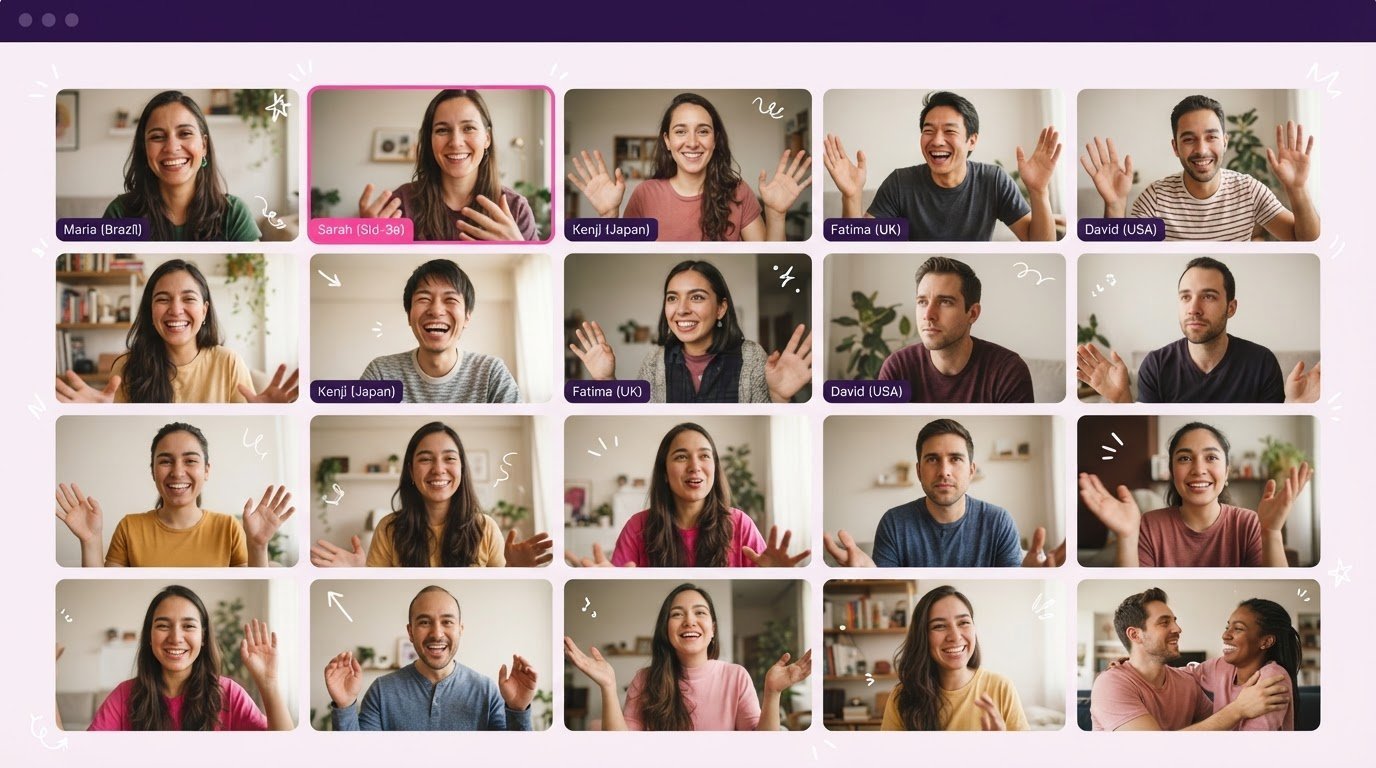
What if your first improv class isn’t a test of how funny or quick you are, but a chance to play and respond alongside other beginners? If you’re wondering, “is improv scary for beginners,” that worry makes sense. Being seen, speaking without a script, and not knowing what happens next can feel uncomfortable.
You don’t need clever lines, acting experience, or a big personality to begin. Beginner improv is guided play, not a test of comic talent. Feeling awkward or self-conscious at first is normal. In a supportive class, the focus is on listening, trying simple activities, and building ideas together rather than getting everything right.
This article explains why improv can feel intimidating, what beginner-friendly sessions involve, and which common expectations are misconceptions. You’ll also get practical ways to make a first session feel more manageable, including what to expect from live online improv with guided games and group reflection.
Key Takeaways
- Learn why unfamiliar group activities can feel awkward, and how waiting for a perfect idea can make it harder to respond naturally.
- Find out whether is improv scary for beginners, and separate common nerves from assumptions about needing to be funny, fearless, extroverted, or experienced.
- Use a simple plan to approach a first session, including choosing one small, manageable goal.
- See how Lila Joy Seminars’ adult improv seminar works: live weekly Zoom sessions of about two hours, with guided games and group reflection.
Is improv scary for beginners, or does it just sound intimidating?
Trying something unfamiliar in a group can feel exposing. You might wonder whether everyone will notice if you hesitate, or whether one awkward moment will define the whole experience. So, is improv scary for beginners? It can feel awkward at first, especially when you’re not used to responding without a plan. But learning improv isn’t automatically a performance, and feeling nervous doesn’t mean you’re unsuited to it.
The fear of being judged can grow when you picture yourself alone on a stage with an audience waiting for a brilliant line. A beginner session is different: guided activities invite people to listen, respond, and explore ideas together. You participate, but you aren’t being asked to deliver a polished scene or prove anything about yourself. A new activity can still feel unfamiliar, and that’s okay.
What beginners are often afraid will happen
You might imagine freezing when it’s your turn, saying something silly, or not understanding what to do. Those worries often come from picturing improv as a public show, where every pause is visible and every response has to land. In a learning setting, the focus is on trying the activity, not producing a perfect answer. You may still feel self-conscious, which is a common reaction to doing something new with other people.
A quiet moment doesn’t mean you’ve failed. Take in what someone else offers and respond simply. The goal isn’t to make a room laugh on command. It’s to take part in a shared activity, one moment at a time.
What beginner improv is, and what it isn’t
Improvisational theatre broadly involves creating or responding in the moment rather than following a fully prepared script. Beginners can explore that idea through guided games and exercises, with time to reflect on what happened. You don’t need prior acting or improv experience to begin. An activity gives you something to respond to, so you don’t have to invent an entire scene from nothing.
A beginner exercise is a place to try an idea; a performance is a presentation for an audience. Improv learning isn’t an audition, a demand to be naturally funny, or a promise that you’ll never feel awkward. It’s a chance to practise listening and responding with other people. You can feel nervous and curious at the same time.
Why improv can feel awkward before it starts to feel more natural
In an unfamiliar group activity, some of your attention may turn inward: How did that sound? Should I say more? Was that reaction strange? Monitoring every word and expression can make it harder to listen and respond. You’re not doing anything wrong. You’re getting used to a new kind of interaction.
Improv can add another tension: you may want to think of the perfect idea before speaking, even though the activity asks you to respond in the moment. The more you edit in your head, the more pressure a simple reply can carry. You might pause or feel that your contribution wasn’t as polished as you wanted.
Early awkwardness is an experience, not proof of failure. It doesn’t mean you’re bad at improv or need to become a different kind of person to take part. Some activities may feel easier than others, and uncertainty can be part of learning.
The pressure to be funny or quick
If you expect improv to mean instant jokes, each turn can start to feel like a test: Be witty, be fast, don’t let the group down. That expectation can pull you out of the moment and into judging your ideas before you’ve shared them.
You don’t need to arrive with jokes or clever lines. Humor may emerge, but it isn’t an entry requirement. A simple response that picks up on what someone else offered gives the activity somewhere to go. Listening can matter more than having a sparkling idea ready.
The vulnerability of trying something unfamiliar with others
Sharing an unfinished thought can feel vulnerable, especially if you’re used to having time to prepare what you say. Clear prompts give an activity shape. Instead of facing an empty space and inventing everything, you have something specific to respond to.
Group reflection offers a moment to pause and notice what an activity felt like. Lila Joy Seminars’ live online sessions include interactive improv games and group reflection in a supportive environment. A structured activity can help you find your footing, though it’s normal for some moments to feel more comfortable than others.
If you’re curious about trying this kind of guided practice, explore the live online improv seminar for adults. You don’t have to wait until every trace of awkwardness has disappeared before taking a first step.
Beginner improv myths versus what a low-pressure class can involve
If you’re asking, “is improv scary for beginners,” separate what you imagine from what a low-pressure improv class involves. There can be participation and interaction, but that doesn’t mean stepping onto a stage or entertaining an audience. A class can give you a guided way to try something new, with room to learn as you go.
| Myth | What may be closer to reality |
|---|---|
| You have to be naturally funny. | Humor can happen, but it isn’t a requirement. Listening and responding to what’s offered can be a useful place to start. |
| You need to be fearless. | You can feel nervous and still take part. A beginner activity is an opportunity to try, not proof that you should already feel confident. |
| Only outgoing people enjoy improv. | There’s no single personality type that qualifies. Curiosity and a willingness to try may matter more than being the most talkative person in the room. |
| You need experience, or every exercise is a performance. | Beginner activities can be guided and interactive without being a public show. Prior improv or acting experience isn’t required for Lila Joy Seminars’ adult seminar. |
Myth: You must be naturally funny or outgoing
Quick jokes may look like the heart of improv from the outside, but they aren’t the entry ticket. If you’re quieter or need a moment to gather your thoughts, you can still approach an activity with curiosity. Notice what another person contributes and respond to that. This gives you something more manageable to focus on than impressing the group, even if confidence takes time to build.
Beginner improv is about trying, listening, and responding, not proving you’re already entertaining.
Myth: Every exercise means performing for an audience
A group activity is not the same as a staged public performance. Lila Joy Seminars’ eight-week seminar meets live on Zoom weekly for about two hours. Sessions include interactive improv games and group reflection in a supportive environment focused on personal growth, confidence, spontaneity, and connection. The format is a guided seminar, not a show, though participating may feel new at first.
For a broader look at guided online improv, explore our guide to online improv classes for adults. You can read at your own pace and decide what kind of first step feels right for you.
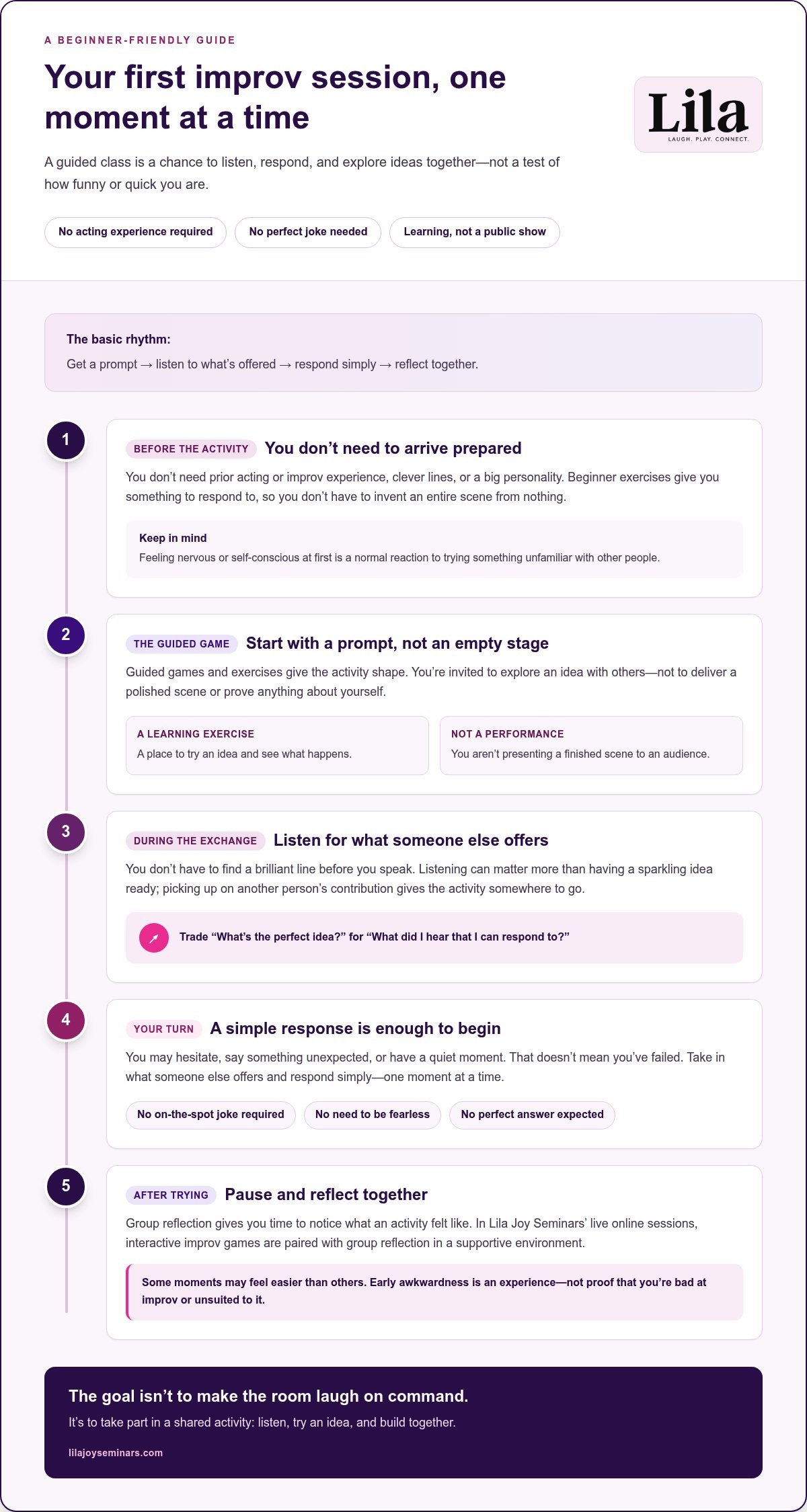
How to make a first improv experience feel more manageable
If you’re still wondering, “is improv scary for beginners,” shift the goal from feeling completely comfortable to taking one small step. You don’t have to impress anyone or know in advance how every activity will feel. A little preparation can help you arrive with a gentler measure of success, while leaving room to warm up as the session unfolds.
Before joining: choose a gentler measure of success
Before a beginner session, decide what would make it a worthwhile first try. It might be showing up, listening to the instructions, or joining one prompt. Keep the goal small and personal. It doesn’t have to be speaking often or feeling confident by the end.
- Set up simply. For a live online session, find a place where you can take part and get settled before it begins. Don’t turn preparation into another test.
- Choose one intention. For example, “I’ll try one activity” or “I’ll pay attention to how the activity is explained.”
- Notice your comfort. As the session progresses, pay attention to how the pace and guidance feel. Your first reaction isn’t a grade or a final verdict.
During a session: focus on the next small response
When an activity begins, listen for the prompt and respond to what’s happening now. You don’t need to plan a clever contribution several turns ahead. If your mind goes blank, a pause is simply a pause. An imperfect attempt can still be part of learning something unfamiliar.
It’s reasonable to need time to warm up. Some parts may feel easier than others, and you may not feel at ease right away. Instead of judging how well you’re doing, notice practical details: Is the instruction clear? Can you follow the pace? What feels manageable in this moment? You can’t control every interaction in a group, but these observations help you understand your experience as it happens.
Afterward, reflect without scoring yourself. Ask, “What did I try?” or “Was there a point when I felt a little more settled?” The answer doesn’t have to be dramatic. Showing up and noticing what the experience was like can be enough to decide what you’d like to do next.
If you’d like to try these small steps in a guided setting, explore the live online improv seminar for adults. The first session is free, so you can experience the format before deciding whether to continue.
A gentle next step: explore live online improv with Lila Joy Seminars
You don’t have to feel completely ready before trying something new. Curiosity can sit beside nerves, and you can notice how the experience feels as you go. If you’ve been asking, “is improv scary for beginners,” remember that uncertainty doesn’t mean you have to rule it out. A first session gives you a chance to experience guided improv for yourself.
What Lila Joy Seminars offers beginners
Lila Joy Seminars offers adults an eight-week, live online improv seminar on Zoom. Sessions meet weekly for about two hours and include interactive improv games and group reflection in a supportive environment. The focus is personal growth, confidence, spontaneity, and connection, not acting or performance training.
You don’t need previous improv or acting experience to join. The games offer a way to explore responding in the moment, while group reflection gives you space to consider what you noticed. You can come without preparing jokes or having a polished idea of how you’ll participate. The session may feel new, but you don’t need experience before you begin.
Decide whether trying a first session feels right
The first session is free, so you can experience the format before deciding whether to continue. You don’t have to predict exactly how you’ll feel or promise yourself you’ll sign up for the full seminar. Notice the pace and activities, then decide whether this kind of group exploration is something you’d like to try.
Taking a first step doesn’t mean feeling fearless. It can mean being curious enough to learn more, even if you’re still a little unsure. If the live online format sounds like a manageable place to begin, explore the seminar.
Take your first improv step at your own pace
So, is improv scary for beginners? It can feel awkward to try something unfamiliar with a group, but nerves don’t mean you’re unsuited to it. You don’t need to be naturally funny, quick, or fearless. Beginner improv is about listening, trying a prompt, and responding, not getting every moment right.
A small goal can make a first session feel more approachable. You might simply show up, follow one activity, and notice how the pace and guidance feel. There’s no need to decide in advance that you’ll love it or feel confident right away.
Lila Joy Seminars offers adults an eight-week live online improv seminar on Zoom, with weekly sessions of about two hours. Interactive improv games and group reflection create space to explore without prior improv or acting experience, and the first session is free. Explore the live online improv seminar and try a first session.
Frequently Asked Questions
Is improv scary for beginners?
It can feel unfamiliar or awkward at first, especially if you picture having to be funny in front of an audience. Beginner improv isn’t automatically a stage performance. Guided activities give you something to respond to, and you don’t need to arrive fearless or know exactly what to do. Lila Joy Seminars’ adult seminar requires no prior improv or acting experience, so you can notice how it feels as you go.
Do you have to be funny to do improv?
No. You don’t need to prepare jokes or prove you’re naturally funny. Beginner improv uses prompts and interaction, so you can focus on listening and responding rather than delivering a polished punchline. Some moments may be amusing, but humor isn’t a requirement for taking part. Think of it as playful exploration with others, not a job where you have to entertain everyone.
Can shy people enjoy improv classes?
Yes, shy people can explore improv, though each person’s comfort will differ. A guided setting can offer a starting point that feels more approachable than an imagined stage or audition, but people won’t all feel at ease in the same way. Lila Joy Seminars offers live online sessions for adults with improv games and group reflection. You can take in the experience and decide what feels right for you.
What happens if I freeze during an improv exercise?
Pausing or freezing can happen when an activity is new. It doesn’t mean you’ve failed or can’t learn. Give yourself a moment to take in the prompt and listen to what others have offered; respond when a thought comes. Beginners learn through attempts, not by producing perfect or instant answers. A simple response is enough to continue exploring.
Is beginner improv a performance in front of an audience?
Not in Lila Joy Seminars’ seminar. It meets live on Zoom and uses interactive improv games and group reflection, rather than a staged public show. You may still feel seen while participating, but that doesn’t make the session an audience performance.
Can I try an online improv class if I have no experience?
Yes. Lila Joy Seminars’ eight-week live online seminar is designed for adults and requires no prior improv or acting experience. Sessions meet weekly on Zoom and last about two hours. The first session is free, giving you a chance to experience the format and notice how it feels. Nervousness doesn’t have to stop you from trying.